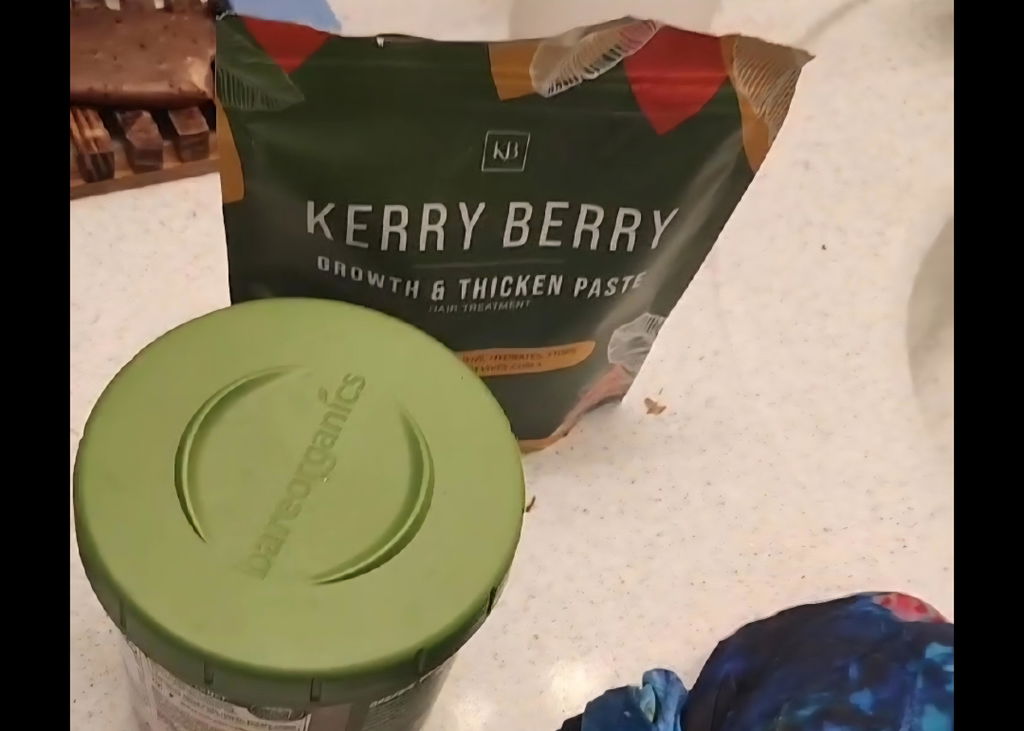
Stop Guessing and Start Growing: The Kerry Berry Guide to Your Crown
Your hair ain't difficult. It's just misunderstood. Many of our customers spend years fighting their natural texture because they’re using the wrong routine. If you want real growth and curls that actually stay hydrated, you have to learn the language of your strands. That starts with knowing your curl type and your porosity.
1. Find Your Number: The Curl Type Scale
The hair typing system uses numbers (1–4) and letters (A–C) to describe your pattern. Knowing your number helps you pick the right products so you don't weigh your hair down or leave it thirsty.

Type 1 (Straight)
This hair type is very straight and has no curls. It tends to be the most shiny because scalp oils can easily reach the tips. However, it can also go limp or get oily quickly if you aren't careful.
Type 2 (Wavy)
This hair has a definite "S" pattern. It is usually flatter at the roots and needs lightweight products to keep from going limp.
Type 3 (Curly)
These are true ringlets and springy corkscrews. They have a lot of bounce but are very prone to frizz and dryness.
Type 4 (Coily/Kinky)
This is the most common texture in our community. It features tight Z-shaped patterns or tiny coils. Because the coils are so tight, scalp oils can't reach the ends, making this type the most fragile and prone to breakage.
2. The Real Game Changer: Hair Porosity
If curl type is the look, porosity is the behavior. It tells you how your hair absorbs and holds onto moisture.
The Float Test
You can test this at home in 5 minutes. Take a clean strand of hair and drop it into a glass of room-temperature water.

Low Porosity
(The Floater)
If your hair stays on top, your cuticles are tightly closed. Water and oils have a hard time getting in.
Medium Porosity
(The Half-Way)
Your hair sinks slowly to the middle. This is a healthy balance where moisture is absorbed and retained easily.
High Porosity
(The Sinker)
If it sinks fast, your cuticles are open or damaged. Your hair drinks water quickly but loses it just as fast.